
Remove paint from a wall in 5 steps
Old layers of paint under your Renovlies cause creases, bubbles and visible transitions in the final result. Strip it properly first, then finish.
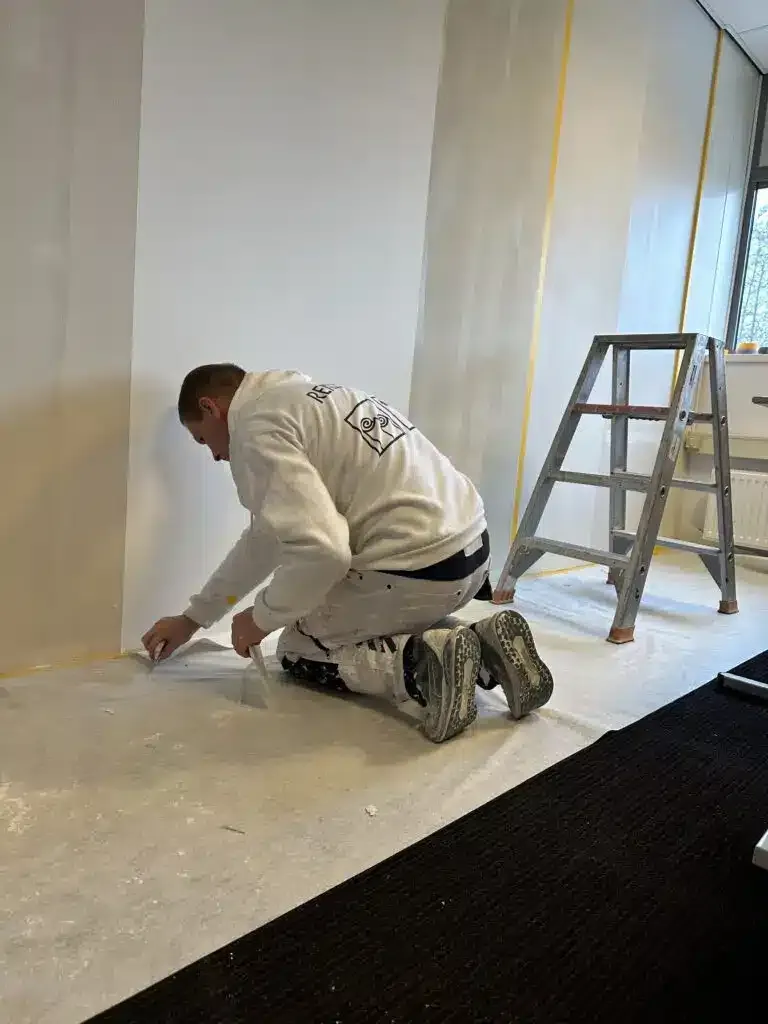
Why old paint needs to come off first
You've just moved into your new home, or you're in the middle of a renovation. The walls look reasonable at first glance, but underneath the paint lies a history of loose layers, fingerprints from gloss paint and spots where the previous owner painted over a stain. If you start working over that with Renovlies or a new coat of paint, you'll see creases, bubbles and visible transitions appear within a few months.
The truth is simple: a wall is never better than its worst layer. That's why we, as Renovlies specialists, spend more time on preparation on average than on the application itself. Below we explain how to remove paint from a wall, plus when it's better to leave it to a professional.
What do you need to remove paint from walls?
- Coarse sandpaper (grit 60-80) and fine sandpaper (grit 180-240)
- Paint stripper (choose a type that matches your paint: dispersion, alkyd or latex)
- Filling knife and wide scraper
- Safety goggles, gloves and a good face mask (FFP2 or higher)
- Dust sheets and masking paper for floors and skirting boards
- Damp cloths and a vacuum cleaner with a fine dust filter
5 steps to remove paint from your wall
Step 1: Prepare the room
Stripping paint creates a lot of dust and chemical fumes. Cover the floor, skirting boards and door frames completely. Open windows and preferably use an extraction fan. Remove or cover sockets and move any furniture to a safe distance or out of the room.
Step 2: Apply paint stripper
Put on gloves and goggles and read the product instructions carefully. Apply the stripper with an old brush in an even layer. Leave it to work as directed. Usually that is 15 to 45 minutes. For thick or multiple layers of paint, repeat the treatment.
Step 3: Scrape off the paint
Once the paint bubbles or curls up, scrape it away in steady strokes using a filling knife. Work from top to bottom in small sections. Don't press too hard: you don't want to damage the wall. Collect the scraped paint in a waste bag. It is chemical waste.
Step 4: Sand
Sand the wall in two rounds. First coarse to remove residue and gloss paint remnants, then fine for an even surface to bond to. Many DIYers skip this step or do it too superficially. You can later see exactly where that happened. Always work with raking light (a work lamp angled across the wall) so you can spot any unevenness.
Step 5: Remove dust and inspect
Vacuum the wall, wipe it down with a damp cloth and let it dry completely. Go over the surface once more with raking light. For a good comparison with other finishes, read our page renovlies or plastering. Still see spots of gloss paint or bubbles? Fill them and sand them smooth before moving on.
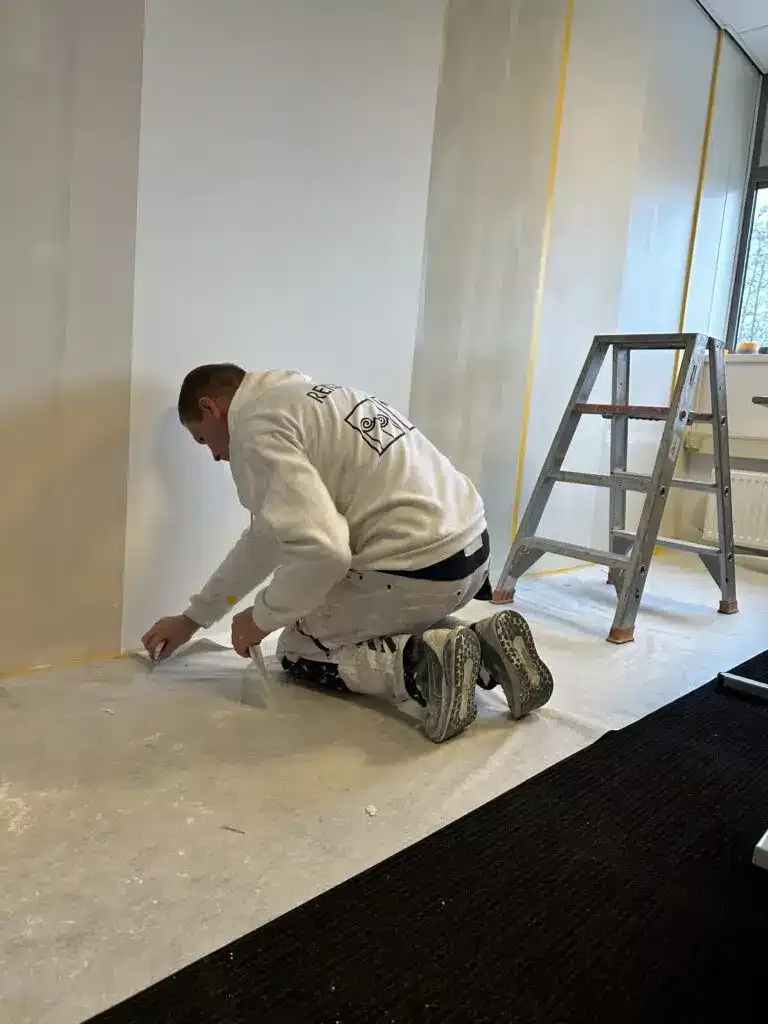
When is doing it yourself not a good idea?
Stripping paint is physically demanding work and the result shows directly in the final finish. For one small wall in a utility room you can do it yourself without any problem. But for a full floor, in a house with lead paint (from before 1960) or if you want to apply Renovlies afterwards, professional preparation is worth it. At Renovlies.net we combine the stripping, filling, sanding and application in one team. No handover between different tradespeople, so no discussion about who is responsible for the end result.
Also read our page on removing concrete pimples for Renovlies and wallpaper-ready versus Renovlies if you've just taken delivery of a new-build home.
Smooth walls without the hassle
We work with raking light, professional sanding machines with dust extraction and know exactly which stripper goes with which type of paint. That saves you a weekend of hard work, a bad back and the risk of a mediocre result. With our 100% coverage guarantee you can also be sure that the Renovlies applied will stay smooth for years.
Request a free no-obligation quote and we'll look together at what your walls need. Honest advice, one team, quality work from start to finish.