
Staircase varnishing: a flawless finish by specialists
A wooden staircase that gets used every day wears faster than you'd think. Professional varnishing with anti-slip: durable, safe and beautifully finished.
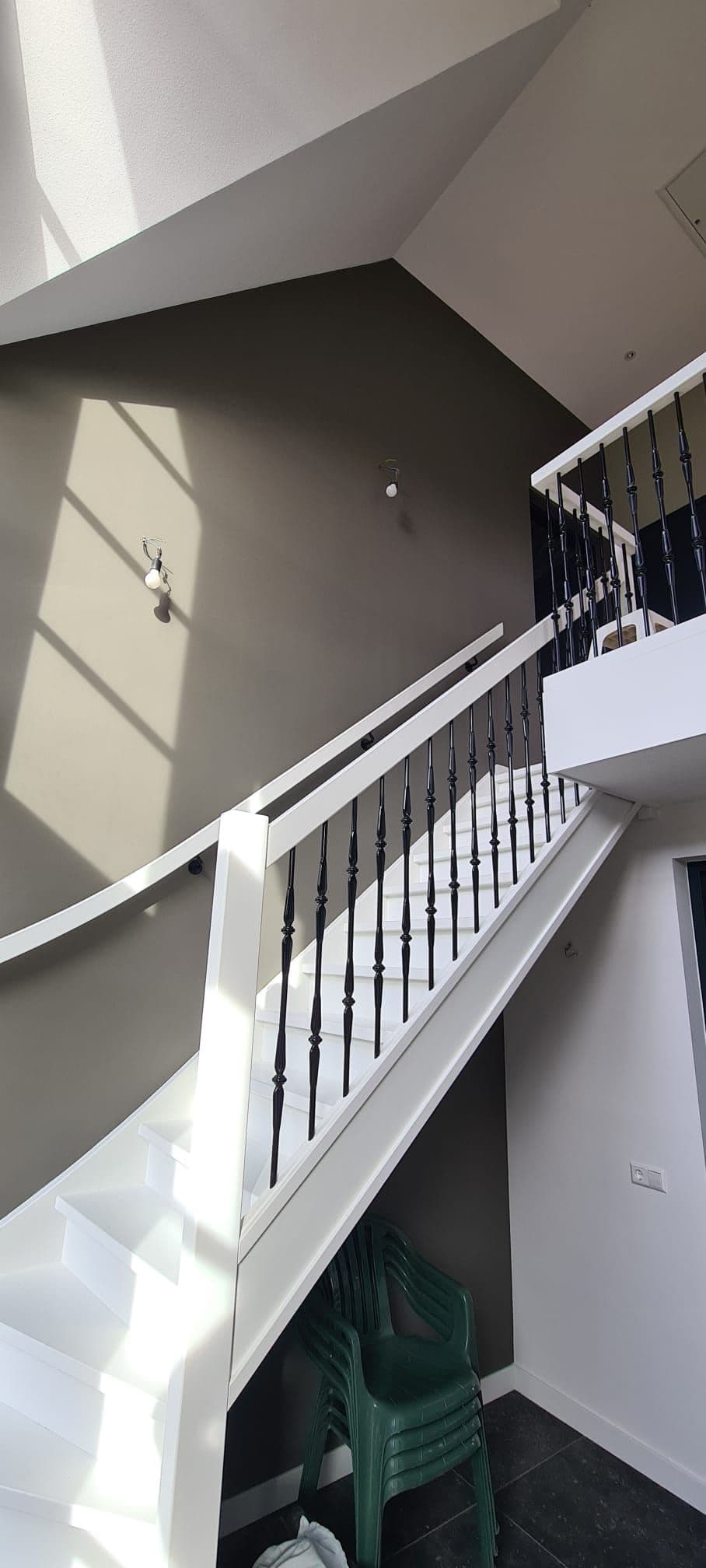
The spot you walk over every single day
Your staircase is probably the most-walked square metre in your entire home. Every morning on the way down, every evening back up, with shoes, bare feet, suitcases and kids' toys. And yet it's usually the last place people pay attention to during a renovation.
The result shows after a few years: treads where the varnish has worn away, rings around the handrails, visible wear on the most-used steps. Whether you have a new staircase and want to prevent it getting to that point, or you want to give an old one a second life: professional varnishing makes the difference between "looks nice" and "stays nice for years".
When does professional staircase varnishing make sense?
In practice, we see three moments when it really pays off:
- Just moved into a home with an old staircase. A refresh makes an enormous difference to the look of the hallway.
- Renovation or remodel. New floor, renovated hallway, a freshened-up staircase fits right in.
- New build with a supplied wooden staircase. Applying protective varnish right from the start prevents years of wear.
You can varnish a staircase yourself, but the combination of physical discomfort (on your knees, bent over), drying times (the staircase is out of use for days) and the fact that every imperfection stays visible makes this a job that in many cases belongs to a specialist. Also read why a Renovlies specialist makes the difference.
Our approach: how we varnish a staircase
Step 1: Inspection and preparation. We look at the staircase, the wood type and its current condition. Loose varnish, splinters, dents in the treads: everything is mapped out. The surrounding area is taped off and covered.
Step 2: Cleaning and sanding. The entire staircase is thoroughly cleaned and machine-sanded. On old staircases with multiple layers of varnish, we first remove the top layers with stripper.
Step 3: Repairs. Holes, cracks and dents are filled with wood filler and sanded back once cured. Loose treads are secured.
Step 4: Base coat (primer). A wood primer ensures the varnish bonds properly and the wood grain absorbs evenly. On dark old staircases, an extra sealing coat may be needed.
Step 5: Applying the varnish. At least two coats of professional-grade varnish. Between coats, a light sand ensures optimal adhesion and an even sheen.
Step 6: Drying and curing. This is the part where amateurs often go wrong: varnish takes longer to cure than it does to dry. We schedule the work so your staircase doesn't need to be used for at least 24 hours for light use, and 7 to 10 days for full curing.
Request a free, no-obligation quote
Anti-slip varnish: safety first
A smooth, high-gloss varnished staircase looks fantastic, but if you've just woken up and head downstairs in socks, it's also an accident waiting to happen. That's why we apply anti-slip varnish as standard to the treads of staircases that get heavy use, especially in households with children, elderly people or pets.
Anti-slip varnish has a fine texture powder worked into the varnish layer, giving you enough grip without it looking any different. On the risers (the vertical sections) we use a smooth finish for a clean, polished look. Safe where it needs to be, sleek where it can be.
Varnishing or painting a staircase?
Varnishing: transparent or tinted, keeps the wood grain visible. Painting: opaque, the wood disappears under the colour layer.
For classic homes with wooden staircases, many customers choose varnishing. The natural look is preserved, and the protection with good varnish types is comparable to paint. Does your staircase suit your new wall finish? Our page on Renovlies wallpaper helps with choices for adjoining walls. For modern interiors with a clean, monochrome colour scheme, painting (often in white, anthracite or black) is a strong choice.
We give advice based on your interior, the current wood and how intensively the staircase is used. Need inspiration? Read our page on Renovlies colours and finishes: many colour choices for walls also work beautifully on a staircase.

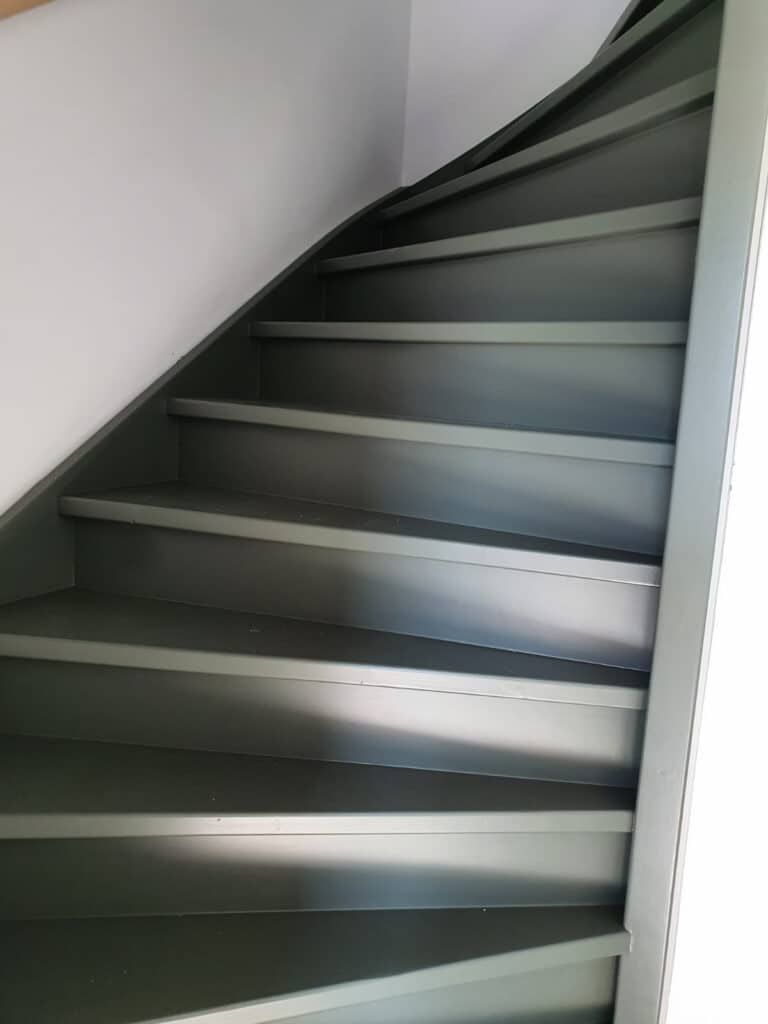
Staircase varnishing by Renovlies.net
Maintenance tips for your varnished staircase
After varnishing, these habits are worth their weight in gold for longevity:
- Don't scrub or clean aggressively in the first 14 days. The varnish is still curing.
- Clean with mild products. Preferably warm water with a dash of neutral soap. Avoid aggressive cleaners containing ammonia or chlorine.
- Avoid puddles of water. Leaving a mop too wet on a tread can cause even varnished wood to warp.
- Anti-slip mats on heavily used treads. Extra protection on the spots where wear hits hardest.
- Dirt-trapping mat in the hallway. Less grit on your staircase means less abrasion damage to the varnish layer.
Why have us do it?
Varnishing a staircase seems simple: sand, prime, varnish. In practice there are dozens of pitfalls that make or break the final quality:
- Wrong sanding pattern leaves streaks that show through the varnish.
- Varnish coats that are too thick cause runs and uneven surfaces.
- Wrong primer causes delamination after months.
- Walking on it too soon leaves marks in the uncured varnish.
- Wrong varnish choice for the wood type (pine needs something different from oak).
Our specialists have done this hundreds of times and know which combination of sanding, primer and varnish suits your specific staircase. One team for the whole job: no handovers, no disputes over responsibility.
What does staircase varnishing cost?
The price depends on the wood type, the current condition, the number of treads, whether there are handrails and balusters, and whether you want anti-slip varnish. For an average straight staircase with 14 to 16 treads, the price for a complete varnish job (inspection, sanding, primer, two coats of varnish, anti-slip on treads) is typically between €600 and €1,250 incl. VAT.
Our prices for the broader Renovlies package we often combine in new-build homes:
| Basic | Basic Plus | |
|---|---|---|
| Renovlies 150gr / glass fibre 150gr | ✓ | ✓ |
| Hand sanding and spot filling | ✓ | ✗ |
| Intensive machine sanding | ✗ | ✓ |
| Priming / sealing | ✓ | ✓ |
| Acrylic sealant on seams | ✓ | ✓ |
| Latex in RAL 9016/9010/witwit | ✓ | ✓ |
| Total excl. VAT (per m²) | € 15.29 | € 18.55 |
| Total incl. VAT (per m²) | € 18.50 | € 22.45 |

- A price without latex is possible: ask about the options.
- Quote from 75 m² onwards.
- Renovations of properties older than 2 years: base price + €5 incl. VAT per m².
Ready for a staircase that stays looking great for years?
We come to you free of charge for an inspection of your staircase, give honest advice on varnish versus paint, anti-slip and colour choice, and then take care of the whole job from sanding to the final coat. With a 100% coverage guarantee on the end result: no loose varnish, no premature wear, no excuses.
Request a free, no-obligation quote and let us treat your staircase with the care it deserves.