
Wall finishing: what types are there and which one suits your wall?
Plaster, Renovlies, glass fibre, painting or wallpaper? The types of wall finishing lined up, with what they're good at and where they fall short after a few years.
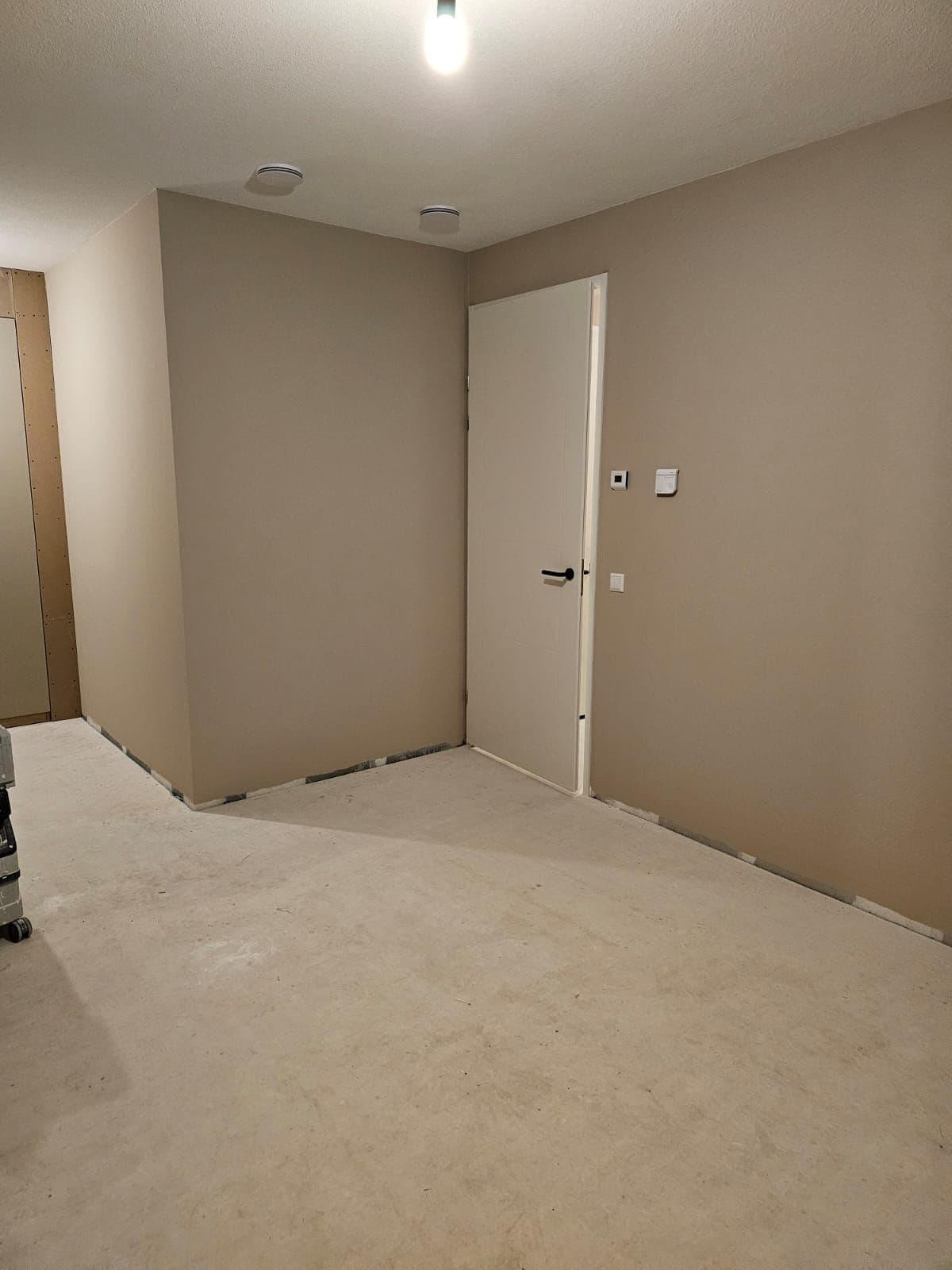
Bare walls and five different opinions
You've just got the keys to your new-build home, or the old wallpaper is finally off. The walls are bare and everyone has an opinion. The contractor says plaster, your father-in-law says just paint it, and online you see concrete looks and printed wallpaper. What you won't read anywhere is what that wall will look like in three years.
We work on walls in new builds and existing homes every week, and we see what still looks sharp after a few years and what doesn't. Below are the types of wall finishing lined up, with what they're good at and where they fall short.
| Wall finishing | Works well for | Watch out for |
|---|---|---|
| Plaster | Settled walls in an older home | Shrinkage cracks in new builds become visible, prone to dents |
| Renovlies with latex | New builds and renovations | Feels less solid than plasterwork |
| Glass fibre fleece | Flat walls, tight budgets or a pattern | Too thin for larger cracks |
| Glass fibre weave | Hallways, offices and schools | Glass fibres can cause itching during application |
| Latex only (painting) | Walls that are already smooth and intact | Every imperfection in the wall stays visible |
| Decorative wallpaper | An accent wall | Doesn't fix cracks in the wall underneath |
| Concrete look and other effects | One wall or a zone | Requires a smooth surface and skilled workmanship |
Plaster
Plaster is the classic smooth wall: a layer of plaster that a plasterer applies tightly. In an older home where the walls have been settled for years, it's a beautiful finish with a solid feel. In a new build it's a different story. New walls are still drying out and shrinking slightly in the first few years, and those hairline cracks show up one-to-one in the plaster layer. On top of that, a dent or scratch in plaster is tricky to repair invisibly.
We leave plastering entire homes to a professional plasterer. In Renovlies or plaster we put the two side by side.
Renovlies with latex
Renovlies is a sturdy fleece made from cellulose and textile fibres that is glued to the wall and then painted with latex. It looks like plaster but absorbs the wall's shrinkage, so cracks don't come through the finish. It's impact-resistant, and if something does go wrong, a spot can be repaired locally. With our 100% coverage guarantee you know that shrinkage cracks in the wall won't show through the finish.
Which thickness you need depends on the condition of the wall. You can read about that in Renovlies thicknesses. There are also downsides, and we lay those out honestly in Renovlies downsides.
Glass fibre fleece and glass fibre weave
Glass fibre fleece is similar to Renovlies but is made from glass fibre and is thinner. It's a bit cheaper and bridges small cracks, so it works well on walls that are already fairly flat. It's also available with a pattern, such as diamond or herringbone. For larger imperfections and new-build walls that are still shrinking, it's often too thin.
Glass fibre weave is woven rather than pressed, thicker and very impact-resistant. You mainly see it in offices, schools and hospitality venues. In a home it's less pleasant, because loose glass fibres can cause itching during application. You can read more about this in glass fibre wallpaper: everything you need to know.
Latex only: painting
Latex is water-based wall paint, and painting is the process of applying it smoothly and streak-free. If your walls are already smooth and crack-free, painting is the simplest finish. Latex doesn't hide anything though: every dent and every seam in the wall stays visible, especially with raking light from a window. Painting therefore works best on a surface that's already smooth, such as Renovlies or plaster.
Decorative wallpaper
Non-woven wallpaper, vinyl or photo wallpaper adds colour and character, and an accent wall can transform a room. It is, however, just a layer on top of the wall. If there's a crack in the wall, you'll see it in the wallpaper over time too. An overview of all types can be found in different types of wallpaper.
Concrete look and other effects
Concrete look, clay plaster look and lime paint are popular, and in the right place they look stunning. They do require a smooth surface and skilled multi-layer application, otherwise it can look dated within a few weeks. Keep it to one wall or a zone. The options are covered in Renovlies colours and finishes.
Which wall finishing suits your situation?
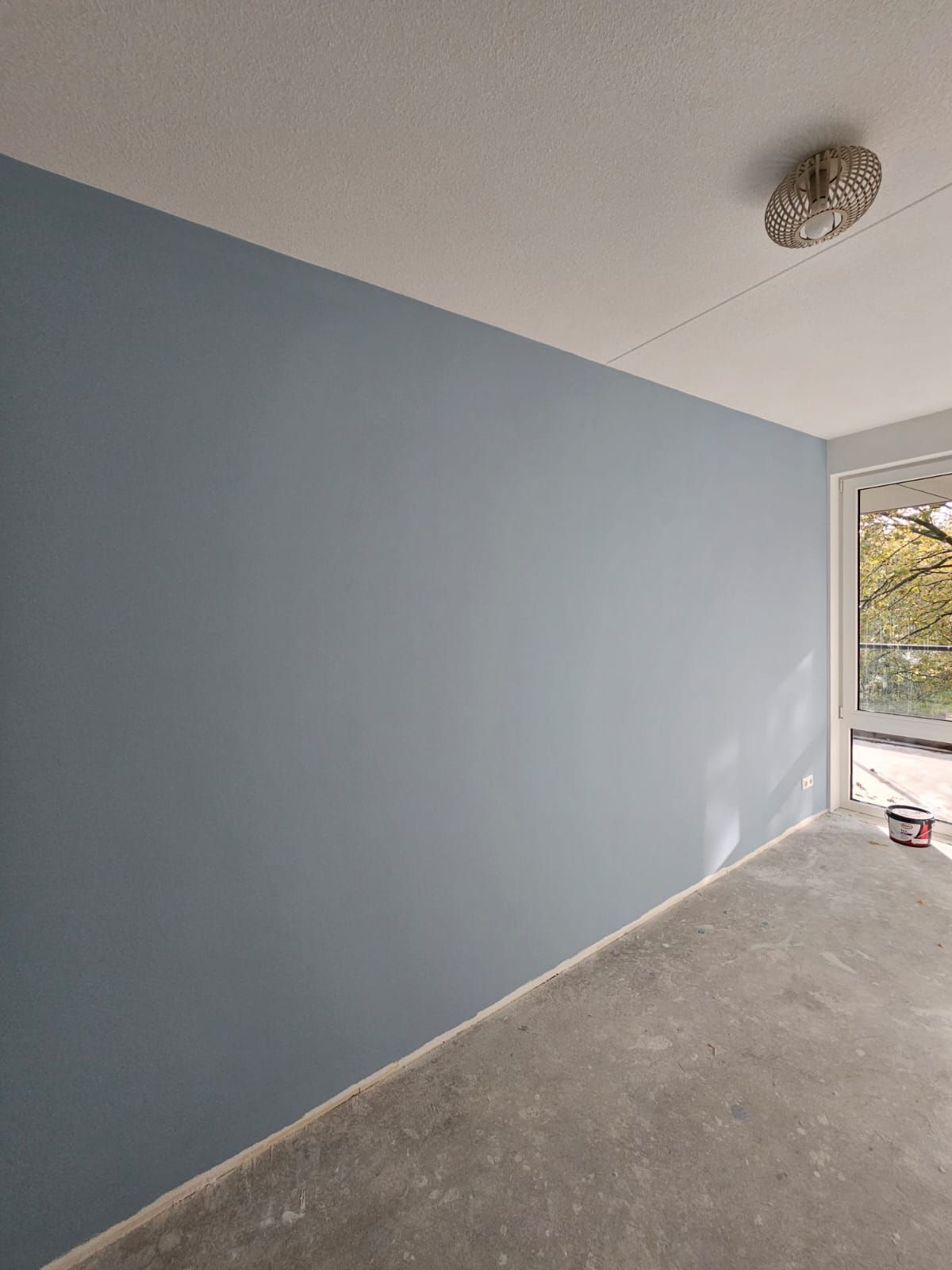
In a new-build home, Renovlies with latex is the best choice in 9 out of 10 cases, because the walls are still moving in the first few years. In an older home with settled walls, plaster can look great, and Renovlies is the affordable alternative when there are imperfections or old paint layers. For a hallway or stairwell where things frequently brush against the wall, impact resistance matters most. And if you want one wall with character, wallpaper or an effect looks best on a surface that's already smooth.
Are you including the ceiling? Then read can Renovlies also be used on the ceiling.
One team for the whole wall
With us, one team handles the entire job: filling, sanding, applying Renovlies and painting with latex in the colour you choose. We come by for a free assessment beforehand, look at your walls with raking light and give you honest advice on which finish we recommend, even if it's not the most expensive one.